Welcome back budding witchlings! Whether you’ve just picked up your first tarot deck or felt the moon pull at your soul for the first time, you might already be wondering: “Can I create my own rituals?” The answer is a loud, joyful, emphatic YES.
Designing your own rituals is not only allowed, but it can become one of the most empowering parts of the craft. Your magic is yours, and that means your rituals should reflect your unique energy, intentions, and beliefs.
Here’s a beginner-friendly guide to help you start crafting rituals that feel personal, powerful, and purposeful. (Power of Three, anyone?)
What Is a Ritual?
To put it simply, a ritual is a set of actions done in a specific order. They can be elaborate or simple, spontaneous or planned. That order changes for each individual, but as humans we are surrounded by little daily rituals:
– Wearing the same “good luck” jewelry or clothing when you have to do a presentation, test, interview…
– Taking ten minutes every morning to create your perfect daily coffee/tea
– Starting or ending your workday with a workout or other movement
– Resetting your life on Sundays to prepare for the next week
– Planning “screen free” time so you can reset
Rituals can be personal, religious, creative, cultural and come with a dozens reasons for the who, what, when, where and why they exist in our lives.
In witchcraft, we intentionally take this a step further. Rituals help us focus our energy, connect with forces (internal or external), and mark spiritual moments big and small.
Step 1: Know Your Intention
Start with a few questions:
What is this ritual for?
What outcome do I want to achieve?
Intentions vary, but some common ones include:
– Protection
– Manifestation (e.g., money, love, confidence)
– Healing
– Releasing negativity
– Honoring a sabbat, moon phase, or special occasion
When determining your intention, specificity is key. “I want money” is not an intention, but a desire. Trying out “I want to attract opportunities for financial growth” could lead to many more opportunities for you to realize your intention.
An important note: intention and manifestation are not release and receive options. You still need to be open to the opportunities that present themselves for the ritual to complete. Enacting a ritual does not absolve you of doing the work.
Step 2: Choose Your Structure
Once your intention is set, its time to think about your ritual structure. I find it helpful to think of rituals like a story with a defined beginning, middle, and end.
A basic ritual structure might look a little like this:
– Preparation – Cleaning and prepping your space, gathering your pieces and tools.
– Opening – Light a candle, cast a circle, put on that specific playlist, or simply take a deep breath to shift into sacred space.
– Main Working – This is where the magic happens. You might say a chant, burn herbs, use crystals, draw sigils, or meditate.
– Closing – Thank any spirits or energies you worked with, ground your energy, and close your circle if you cast one.
Creating ritual timing is very personal. You can adapt or skip any part of the above!
Step 3: Select Your Tools
Full disclosure here, you don’t need external tools.
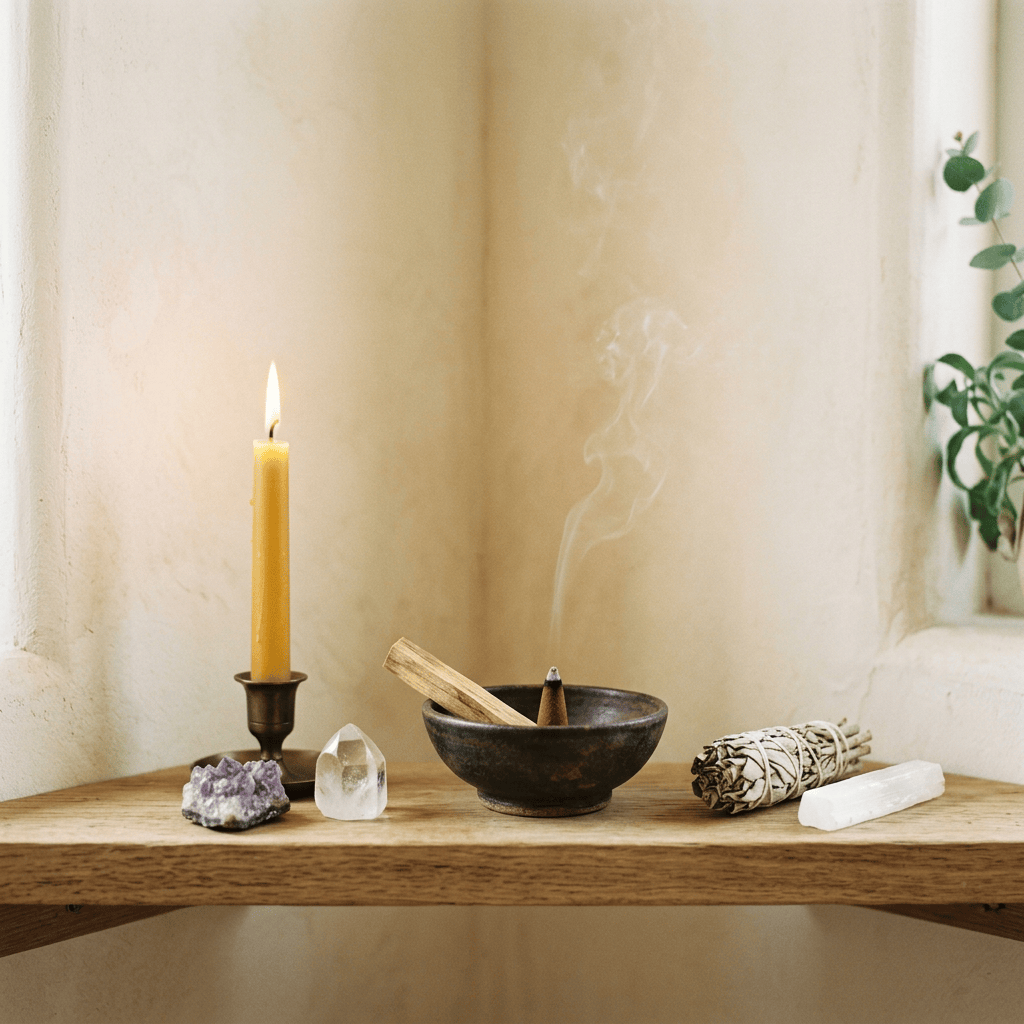
However, if you like to add some pizzazz and personality to your ritual spaces, common tools to include:
– Candles – Great for setting moods and representing intentions. White and black are always good basics, but if you’d like to add a kick to the ritual intention I highly recommend looking into color magic and associations.
*(Beginner budget tip – dollar stores usually carry an abundance of candles from tea lights to pillars. You can get scented or unscented as well).
– Herbs – Burn them, steep them, sprinkle them. Every practitioner has their basics, so doing a little research to match the herb to your goal will help align the ritual pieces together.
*(Beginner tip – check into the herbs etc that grow wild in your area. Wildcrafting can be a lovely way of connecting with the earth and prepping prior to any ritual, and it never hurts to learn more about the area you live in.)
– Crystals – There is no “one size fits all” when it comes to crystals. Pay attention to how your body reacts to crystal energies when choosing one for your purpose. They align to the natural world, chakras, dieties/spirits, as well as having color associations. In addition, they come in a variety of sizes and shapes. If you’re setting a “self-love” intention for example a rose quartz shaped like a heart or rose adds an extra dimension to your ritual.
– Incense or Oils – Much like herbs, knowing the properties inherent in the scents you are choosing is important when including an incense or oil in your ritual. Some incense and oils are not pet friendly. Be careful if you are planning to use an oil topically on your skin as some can be caustic if made with certain plants or inferior ingredients. Always make sure to test and do your due diligence here.
– Elements – If the above is too much for you starting out. You can always fall back on representing the four (or five depending on your practice) elements in your ritual with symbols, pieces of the natural world, artwork etc. These are water, fire, earth, air (and spirit) and can be represented in a variety of ways in your ritual space.
(Water) – a seashell, a bowl of water, a picture of the ocean, the color blue, or soundscapes playing through your audio account
(Fire) – a candle or incense, ash from burnt incense or a firepit, the color red, a digital candle from an app on your phone
(Air) – a feather, a fan blowing gently, the color yellow, or a wand
(Earth) – a bowl of dirt, a bowl of salt, rocks/pinecones/flowers etc that you’ve collected on a walk. *Note that if you use a bowl of salt, please dispose of responsibly as salt should not just be dumped on the ground outside.
(Spirit) – this one is fairly personal, but common choices could be a chakra chart, Tree of Life or sacred geometry symbology, spirals/labyrinth symbols, personal jewelry or iconography that speaks to you, music
Tools, like ritual design, are personal choices. You’ll find that practitioners will suggest any and all sides of this argument. Don’t stress about having the “right” things.
Intent matters more than aesthetics. You want to sit in an empty and quiet space, take a walk on a beach, hike your way up a mountain and breathe your intention into life? Go for it!
To be honest, I’ve taken myself to the zoo or aquarium more than once. Found myself in front of my favorite animals really thinking about the traits they exhibit, and which ones I want to bring into my life. I have, on more than one occasion, completed a mediation ritual while watching otters play.
Step 4: Write or Speak Your Words
The voice has power, regardless of form. You can:
– Write your own spell
– Speak openly from the heart
– Read a passage from a book or poem that resonates
– Hum, sing, or chant
This is not a high school book report. A single sentence can be incredibly effective if spoken with sincerity. In addition, do not feel self-conscious about having your written chant or ritual in front of you while you are setting your intention. If you work better electronically and would like to design your ritual via computer or notes app on your phone, carry on!
We are human. We are fluid, gloriously imperfect, and messy. Your rituals are an extension of you as a practitioner, so give yourself the grace to practice in a way that works with your habits and needs.
Step 5: Align with Timing (If You Want)
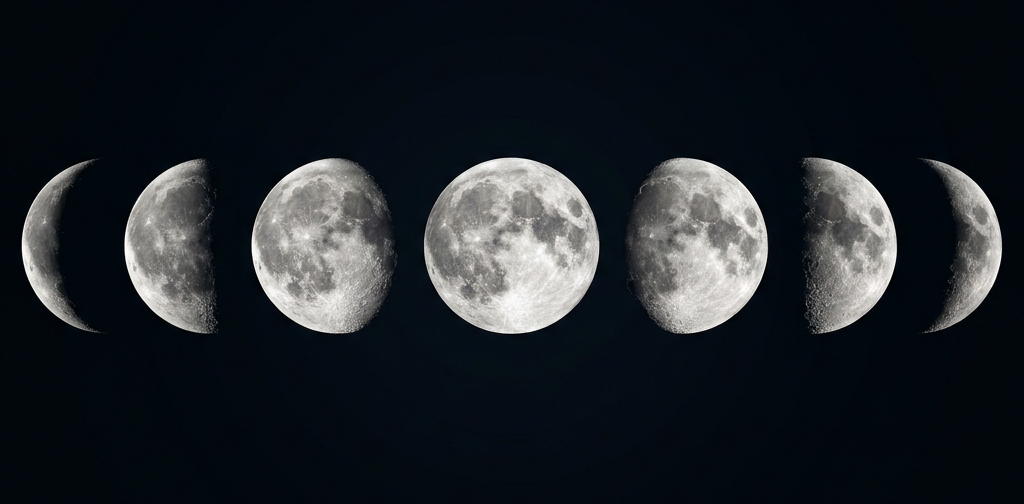
Some practitioners love working with the moon, seasons, or planetary days. Every book you will ever read will recommend one solution or another for timing your practice. For example:
- Moon Phases
– New moon: beginnings
– Full moon: manifestation and clarity
– Waning moon: banishing and release - Days of the Week
-Sunday – growth, abundance, strength
-Tuesday – protection, banishing, courage
-Friday – beauty, love, passion, home or hearth - Seasons
– Spring
– Summer
– Fall
– Winter
There is a lot of conversation around timing when completing rituals. I’m of the mind that you do not need a specific time to do one. That being said, there are seasons and phases where energies are heightened that make it ideal for certain types of ritual work.
I’ve found that my life rarely works on that schedule. I follow the moon phases, but tend to do a lot of my practice on a seasonal level instead. I spent more than a few years and rituals in my practice upset that I “missed the timing” based on research and other practitioner advice.
My advice is don’t wait for the “perfect” time. Your intention matters more than the clock.
Step 6: Trust and Reflect
After your ritual, take a moment to ground yourself. Drink water, journal your thoughts, or stare blankly at a wall while you rest.
Write down what you did and how you felt. This will help you refine your practice and build your personal magical style. In addition, these written records are wonderful things to include in your grimoire as you grow. I have a collection of rituals from over the years. I’ve revisited and edited different ones depending on where I’ve been in life or where I’ve wanted to go.
Final Thoughts
There’s no wrong way to create a ritual if it’s done with clear intention and respect. The most powerful magic comes from you. Trust your instincts, stay curious, and let your rituals evolve as you do.
Whether you’re lighting a candle with a whisper of hope or calling on ancient deities under the stars, you’re doing real, beautiful magic.
Welcome to the path, witchlings.

