🌙 🔮
So, you’ve taken some first steps into witchcraft, and you’re ready to carve out a sacred space or perhaps your very own altar. Whether it’s tucked in a quiet corner or spread across an entire table, your altar is a powerful place to connect with your magic, focus your energy, and help integrate your practice into your every day.
Let’s walk through the process of building your first altar with no pressure, no perfectionism, just a space that is authentically you and intentionally magical.
🧹 What Is an Altar?
An altar is (under normal definitions) a dedicated space where you center your spiritual practice in some way. Think of it as a personal portal. One that is part devotional space, part energetic anchor. Altars have a variety of uses, and many are specific to the practitioner, which is why it’s essential to think of an altar as your home for your practice. Altars are commonly used for:
- Daily rituals or meditations
- Spellwork, rituals and intention setting
- Honoring deities, ancestors, elements or spirits
- Celebrating the changing seasons, sabbats, esbats and moon phases
- Just feeling grounded and magical
🌿 Step 1: Define and Find Your Space
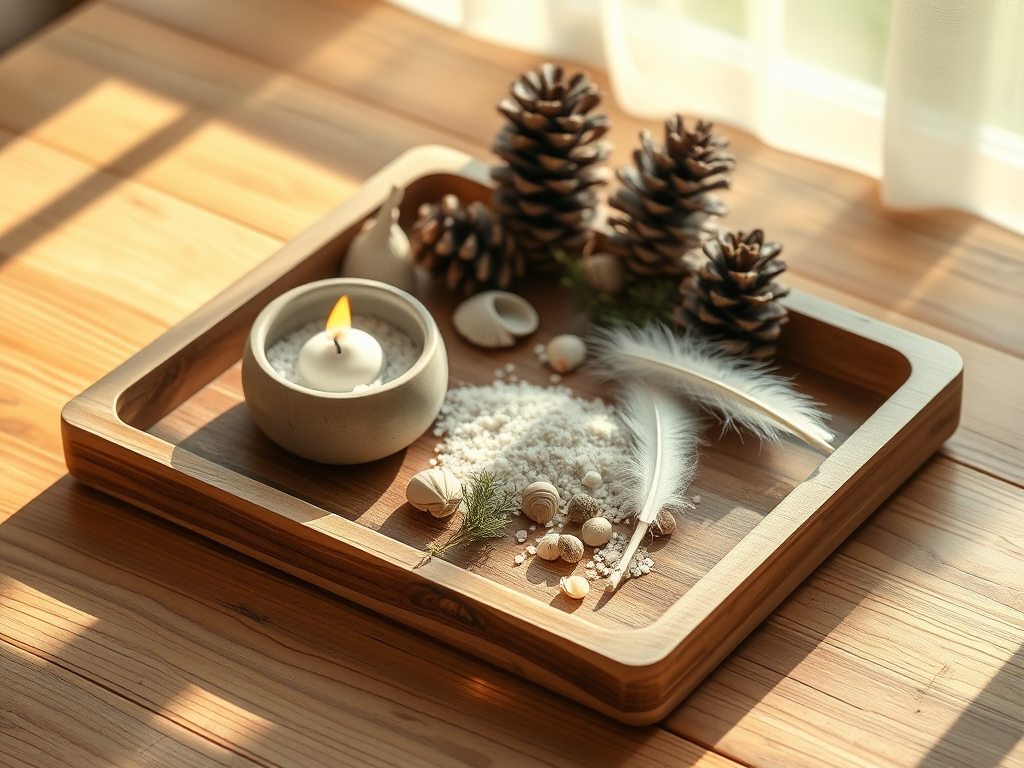
You don’t need a full room, or even a full table (though if you have one, amazing!). You can use:
- A small space on a bookshelf
- A corner of a dresser or desk
- A single tray you can tuck away when not in use
- A windowsill
- A fallen tree stump in the backyard
- A jewelry box or small tin box (Altoids tins are GREAT for teeny, discreet altars. Especially for inside your car, or travelling)
- A cloth, or small bag you pull out when needed
This is your space. Choose somewhere that feels private, safe, easy to access. Nowhere is it written that your altar needs to be over the top and flashy. Choose what feels right for you whether that’s one main altar, or a dozen small ones. Personally, I have three to four altars at any given time:
I considered my stove (the hearth of my home) an altar and bring in a lot of spiritual practice into my everyday cooking.
I have a “to go” altar that I keep at work. It has a small cloth and representations of the four elements. A feather for air, rocks for earth, a seashell for water, and a candle/lighter for fire. I use it occasionally when I need to recenter myself in the office.
I have two separate smaller altars dedicated to Nyx and Hecate. These contain images and associations for both goddesses.
I also typically have an additional everyday altar in my home where I do meditations, affirmations and regular ritual practice.
🔮 Step 2: Decide the Purpose
Most altars have a purpose. What’s the intention behind your altar?
- A general spiritual workspace?
- A place to honor a deity or ancestor?
- A seasonal altar aligned with the Wheel of the Year?
- A space for manifesting, healing, or protection?
Knowing the “why” helps you decide what to include and what kind of energy you want to cultivate there. As a big, important all caps note. ALTARS CAN HAVE MORE THAN ONE PURPOSE. Contrary to what seems to be a prevalent belief on social media, it is not at all necessary to have a single altar for a single purpose.
I’m a big fan of changing things up. Sometimes I want different colors, different crystals for a particular week or season. To that end, I am consistently reorganizing my main altar to align with the things I want to focus on. Altars, like your practice, do not need to be “set.” They just need to work with how you want/need to practice. Life requires adaptation and growth, and your altar should reflect that as well.
🕯️ Step 3: Gather Your Items
Witchcraft does not need to be expensive. Some of my favorite items for my altar, I found at the dollar store or thrift stores. An easy way to start simple, is to use what you have. Bowls/plates from your cabinets, herbs from your kitchen, your personal jewelry. Here are some ideas:
Choose what resonates:
- Cloth or base: A scarf, bandana, or beautiful cloth can define the space. Seriously though, you could use an old t-shirt that has meaning for you, if it’s what you have available.
- Candle: Represents light, transformation, or the element of fire.
- Bowl of water or shell: Symbolizes emotion, cleansing, and the element of water.
- Stone, salt, dirt, or plant: Connects you to the element of earth and grounding energy.
- Incense or feather: Represents air, inspiration, and clarity.
Optional additions:
- Crystals
- Pendulum – this can be a crystal, or simply a favored jewelry pendant on a string
- Herbs – these can be living plants, dried herbs purchased for a specific purpose, or small pinches from your kitchen cabinets
- Photos of ancestors
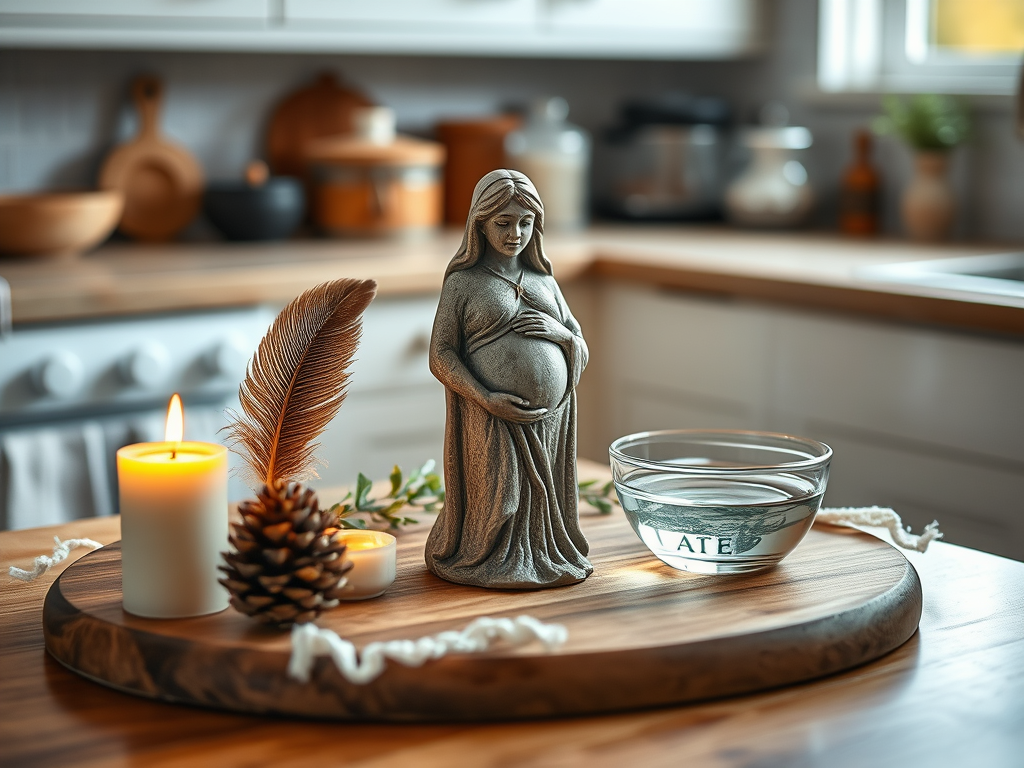
- Statues, artwork or symbols of deities
- A journal, notecards, or Book of Shadows
- Trinkets that bring you joy or invoke specific feelings for you
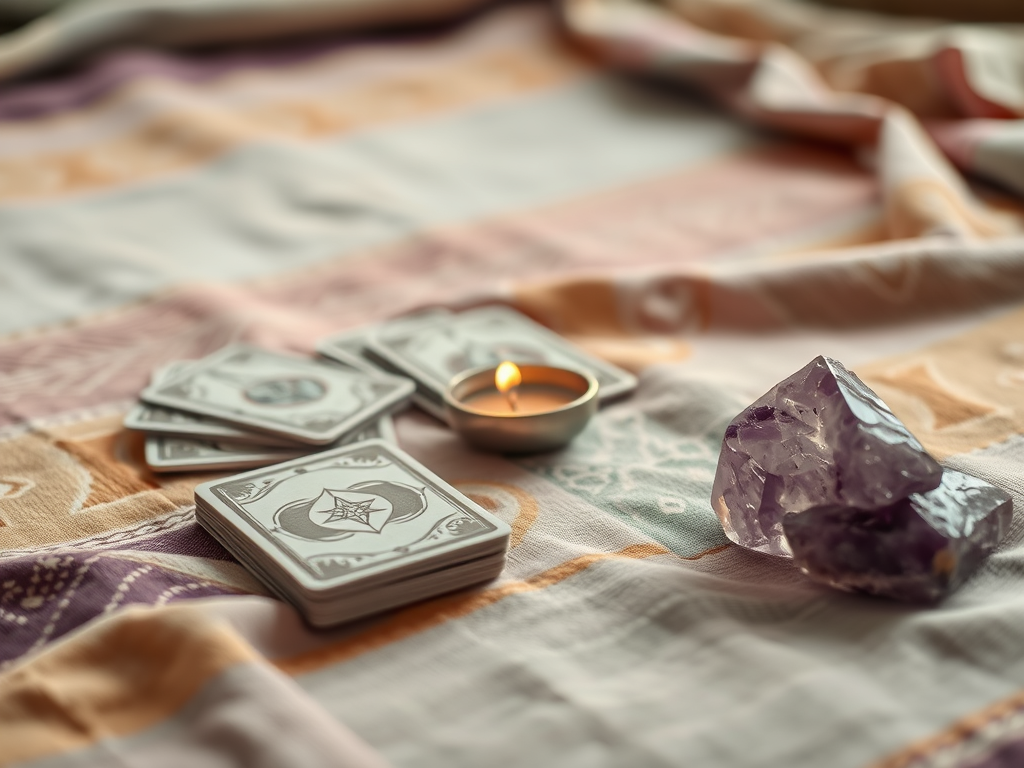
- Tarot or oracle deck
- Offerings like coins, flowers, honey, or wine
Tip: Let your intuition lead. If something feels special or sacred to you, think about whether it deserves a place of honor on your altar.
🌼 Step 4: Arrange with Intuition and Intention
There’s no “right” way to lay out your altar. You can go with:
- The four elements: Place items that represent earth, air, fire, and water in four directions.
- A central focus: Put a candle, deity statue, or object of intention at the center.
- Seasonal style: Align your altar with the current sabbat (like flowers for Beltane, leaves for Mabon, holly branches for Yule).
- Haphazard Magic: Maybe, just maybe, its supposed to be messy. Only you can decided that one.
Altars are living spaces, not static ones. They are meant to be used.
Your altar may need to be on a different surface because the bookshelf or dresser doesn’t work.
Maybe you don’t like the cloth you used.
Maybe you find yourself forgetting to change out the flowers. Perhaps pinecones or other natural representations would be better for your lifestyle and your practice.
If you are constantly knocking over the candle while doing your ritual, that candle is probably in the wrong spot.
Move things around until it not only feels right but also aligns with how you work in ritual. Using all your senses to determine the look, feel and use of your altar is part of both intention and intuition.
🌙 Step 5: Activate Your Altar
Once everything’s in place, take a few moments to activate the space. You can:
- Light your candle and speak an intention or chant aloud
- Meditate or breathe deeply at the altar
- Ring a bell, clap your hands, or burn incense to “wake up” the energy
- Say something simple like: “I dedicate this altar as my sacred space. I welcome peace, power, and presence.”
Trust that your energy is enough is also important here. Activating your space is also part of arranging it with intention. It’s also important to remember that intentions/activation can change.
🌸 Step 6: Care for Your Altar
You as a human being evolve throughout the days, weeks, years ahead. As I’ve already mentioned, your altar is not set in stone. Clean it regularly, reset it and reactivate it as you need. Create multiple altars each with a different purpose if it aligns with your practice. The important thing is to check in often. Say a few words or take a few deep breaths. Just be there.
✨ Final Thoughts
Crafting your altar is less about rules and more about resonance. It’s a mirror of who you are along the way. Sacred spaces that grow as you do. No two altars look alike, and that’s what makes each one powerful.
So gather your trinkets, trust your instincts, and create a space where your magic can bloom.
Welcome home, witchling. 🕯️🌿

